
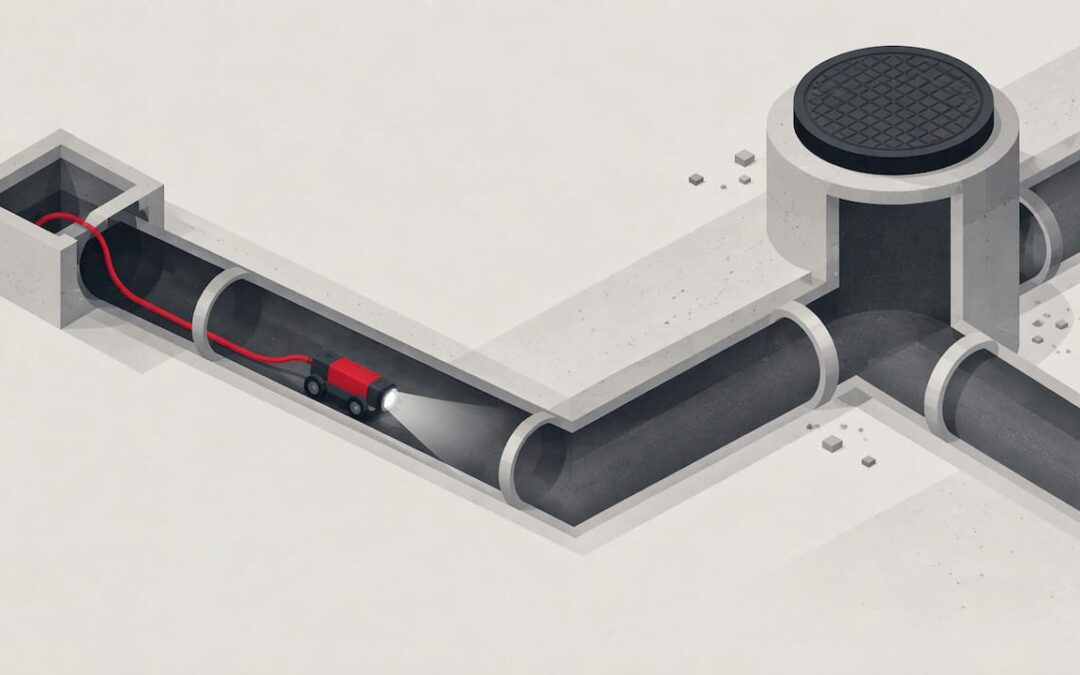
A sewer scope inspection is a video inspection of the sewer line that runs from your house to the city connection or septic tank. A technician feeds a waterproof camera down the pipe and watches the footage live, so cracks, roots, clogs and sagging sections show up before they turn into a backup. It takes under an hour, and it is the only way to see what is happening inside a line buried under your yard. At Liberty Drain Co, we run sewer camera inspections for homes and businesses in Port Charlotte, Sarasota County, North Port, Venice and South Venice.
TL;DR
- A sewer scope is a camera inspection of the lateral sewer line, from the house to the municipal tap or septic tank.
- It can show roots, cracks, offsets, standing water, blockages and pipe damage. It cannot see concealed or latent defects.
- The camera run itself usually takes about 5 to 10 minutes, and the whole visit should take no more than an hour.
- Scope before you buy a home, and any time you have slow drains, gurgling toilets, sewer odor or repeat clogs.
- If the camera finds a clog or buildup, hydro jetting can clear the line, and a follow-up look confirms the result.
Table of Contents
- What a sewer scope inspection is
- How a sewer scope works
- What a sewer scope can find
- When to get a sewer scope inspection
- How much a sewer scope costs
- What the report and video should show
- What to do after the scope
- Scope and clean in one visit
- FAQ
- Sources
What a sewer scope inspection is
The InterNACHI standards of practice define a sewer scope as a paid video inspection of the lateral sewer line. That is the pipe running from the house, near the foundation, out to the municipal or HOA tap or to a septic tank. The goal is to report visible, material defects and, typically, to identify what the pipe is made of.
Think of it as the plumbing equivalent of an X-ray. Your main sewer line carries every drop of wastewater out of the building, and it is the one part of the plumbing system you cannot look at. Pipes in this part of Florida may be clay, cast iron, Orangeburg, PVC or something else, and each fails in its own way. A scope tells you which you have and what shape it is in.
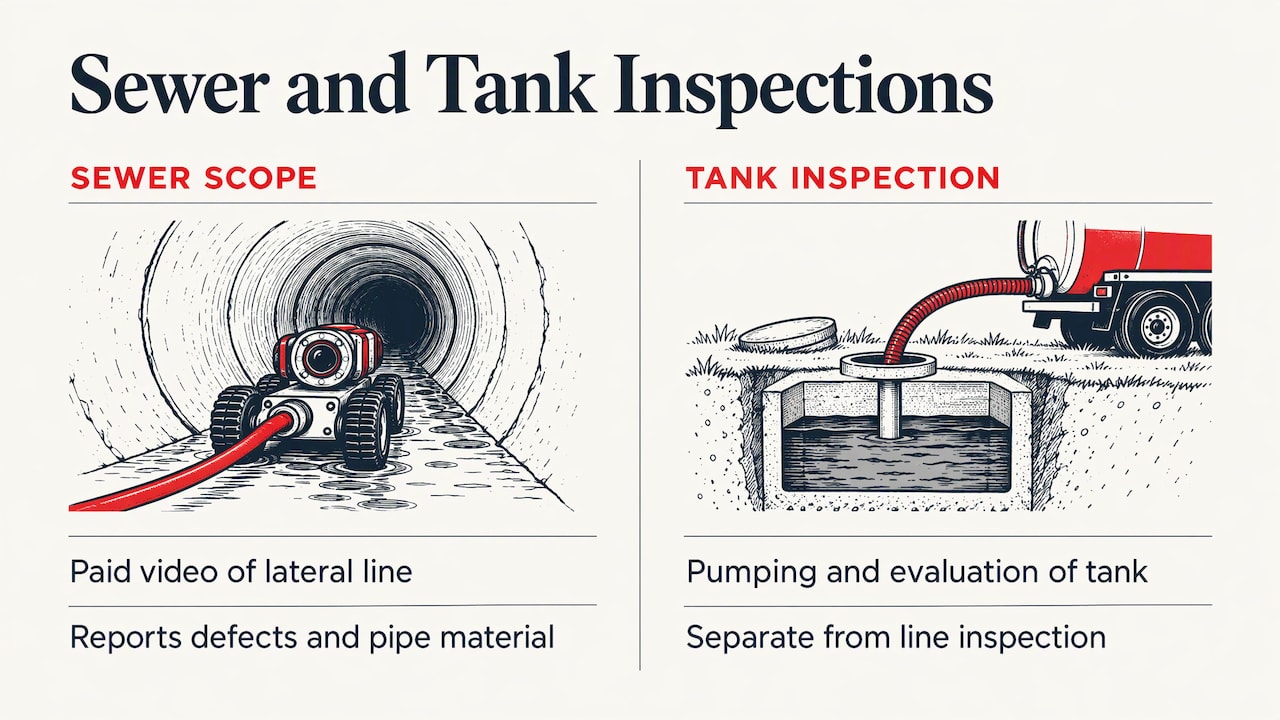
It is not the same thing as a septic tank inspection. A scope looks at the line leading to the tank. Pumping and evaluating the tank itself is a separate job.
How a sewer scope works
The process is simple and mostly non-invasive.
- Find the access point. Realtor.com reports that technicians commonly use a cleanout, which is a capped pipe outside or in the basement or crawlspace. If there is no cleanout, they may pull a toilet to get in.
- Run the camera. A waterproof camera on a flexible cable is pushed down the line toward the city connection or septic tank, as Redfin describes it. The technician watches real-time footage on a screen.
- Read the screen. The image can show the camera’s depth, the slope of the pipe, breaks, bellies, deterioration and clogs. A locator can pinpoint where a problem sits underground.
- Review the findings. Afterward, the technician goes over what was seen and what the next steps are.
How long it takes
Redfin says the inspection should take no more than an hour overall, with the camera portion running about 5 to 10 minutes. Longer lines, tight access or a line that needs clearing first will add time.
What you should do beforehand
InterNACHI’s field guidance says occupants should not run sinks, showers, tubs, washing machines, dishwashers or toilets during the scope. Water in the line makes the picture harder to read. Once the camera is out and the cleanout is back in place, water is turned back on to check for leaks.
A few things make the visit smoother:
- Know where your cleanout is, and clear space around it.
- Move vehicles, planters or furniture that block it.
- Tell everyone in the house not to use water until the technician says the scope is done.
- Mention any history: past backups, root trouble, earlier repairs.
What a sewer scope can find
The InterNACHI standards list the conditions an inspector reports as needing correction. They include:
- Visible cracks
- Tree-root intrusion
- Offsets over ¼ inch
- More than 1 inch of standing water
- Blockages or restrictions
- Crushed, broken, separated, disconnected, collapsed or deteriorated pipe
- Excessive rust or scale
- Excessive grease
- Deteriorated concrete, egg-shaped pipe and delamination
The same standards are clear about the limit: a scope reports what is visible. It cannot identify concealed or latent defects.
What these problems mean in plain terms
Realtor.com’s plumbing experts explain the main culprits. Roots can enter a line through tiny cracks and keep growing inside it. Grease slows flow and catches debris. A belly is a settled, low section of pipe where water and waste can collect instead of draining away.
That last one matters in Southwest Florida, where soil is sandy and ground conditions shift. A belly does not always cause an immediate clog, but standing waste in a line is a recurring-blockage problem waiting to happen.
Maintenance issues versus structural issues
Not every finding is a big repair. It helps to sort what the camera shows into two groups:
| Finding | What it usually means | Typical next step |
|---|---|---|
| Grease buildup | Flow restriction, often fixable | Cleaning, then a follow-up look |
| Light root growth | Roots entering at a joint or crack | Clearing the roots and watching the line |
| Heavy blockage | Line is restricted or blocked | Clearing the line to restore flow |
| Offset or separated joint | Pipe sections no longer align | Evaluate for repair |
| Belly | Low spot holding water and waste | Evaluate for repair |
| Crushed or collapsed pipe | Structural failure | Repair or replacement planning |
The first three are maintenance problems. The last three are structural. Location, severity and how far the damage extends along the run decide how serious the situation is: one isolated problem is a very different thing from damage repeated along the whole line.
When to get a sewer scope inspection
Before you buy a home
A pre-purchase sewer inspection is the most common reason people scope a line. Standard home inspections generally focus on what is visible and accessible in the house, and the buried sewer lateral is out of sight. Scoping before closing gives you a clear picture of a cost that could otherwise land on you the first month you own the place.
It matters most with:
- Older homes, especially those more than 40 years old
- Properties with mature trees close to the line
- Homes with prior sewer repairs
- Properties where the seller cannot say when the line was last checked
If the scope finds trouble, you have information to work with. You can ask for repairs, renegotiate, or decide on a different property, before the purchase is final.
When your drains are already acting up
If you own the home, scope the line when you notice:
- Slow drains in more than one fixture
- Gurgling toilets or drains
- Sewer odor in the house or yard
- Unusually green patches of lawn
- Clogs that keep returning after you clear them
The repeat clog is the big one. If a line clogs again and again, there is a cause, and clearing it without looking leaves the cause in place. A camera shows you whether it is roots, grease, a belly or a broken joint.
As prevention
Realtor.com’s experts stress that the camera is most valuable before symptoms become obvious, because small cracks can admit roots, and roots or grease can eventually create clogs and backups. For landlords and property managers, an inspection between tenants or on a regular schedule is a practical way to avoid middle-of-the-night emergency calls.
How much a sewer scope costs
Prices vary by region, access and the condition of the line. Realtor.com reports a typical range of $100 to $250, attributing it to the International Association of Certified Home Inspectors. That range reflects a standard inspection with easy access.
Several things can push a price up:
- No cleanout, so a toilet has to be pulled
- A long or hard-to-reach line
- A line that must be cleared before the camera can pass
- Locating and marking the line’s path on the ground
At Liberty Drain Co, we do not publish fixed prices on our site, because the cost depends on your property and the job. What we do is give you a clear price before work begins, so you know what you are paying for. Call us and describe the situation, and we will tell you what to expect.
What the report and video should show
A good inspection leaves you with something you can use. Under the InterNACHI standards, the inspector should record the entire video and provide it to the client, document observed defects, and note when a cleanout is not visible or accessible. A report should identify observed material defects, define which portions were inspected, and explain which areas were not inspected and why. It may also include comments and recommendations.
That last point on uninspected areas is worth reading closely. If the camera could not pass a blockage or a collapsed section, the report should say so, because the rest of the line is then unknown.
Our perspective on sewer scoping
We see the same story in Port Charlotte homes again and again: a drain gets cleared, it clogs again a few weeks later, and nobody ever looked inside the pipe. Clearing a clog without a camera is guesswork. A sewer camera inspection takes the guesswork out, because we see what is causing the problem and where it is.
That is why we pair sewer camera inspections with hydro jetting and drain cleaning. The camera identifies the cause. The right cleaning method removes it. Our goal is not just a line that drains today, but one that is less likely to block again, because we address root causes and not just the symptom.
Customers have told us we resolved chronic problems that earlier visits did not. That comes down to one habit: look first, then fix. We also believe you should know the price before we start work, and that an emergency does not wait for business hours, so we are available 24/7.
If you are buying a home, managing rental property or running a business, scoping the line is a small step that can save you a large, messy surprise.
Scott
What to do after the scope
The result usually falls into one of three situations.
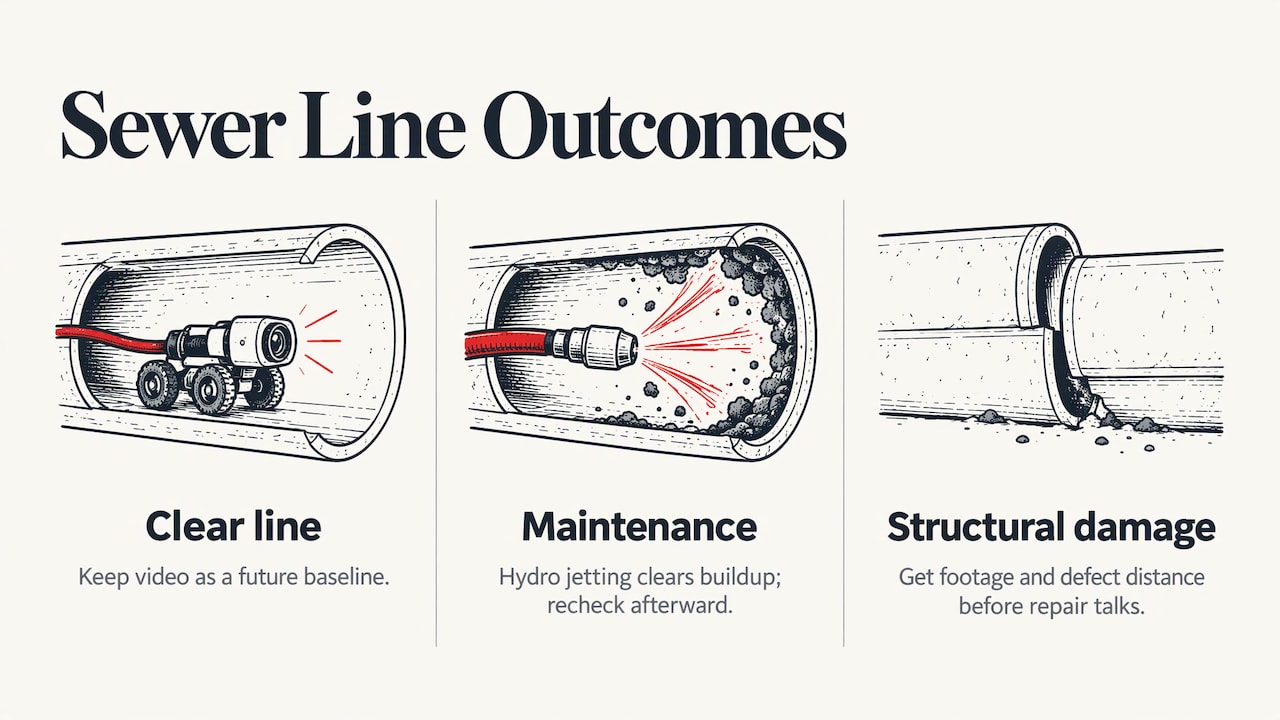
The line is clear and sound. You have peace of mind and a baseline. Keep the video for future comparison.
The line has a maintenance problem. Roots, grease or debris are the usual cause. Cleaning the line removes the restriction, and hydro jetting is built for exactly this kind of buildup, using high-pressure water to scour the pipe walls. A second look afterward confirms the line is clear.
The line has structural damage. If the camera shows a collapse, a severe offset or a belly, you need a plan. The decision turns on where the damage is, how bad it is and how much of the line is affected. Get the footage and the distance-to-defect information in hand before you talk to a repair contractor or, if you are buying, before you negotiate.
Scope and clean in one visit
If you are dealing with a stubborn clog, a sewer backup or a line you do not trust, we can inspect it and tell you what we see. Liberty Drain Co is a family-owned drain cleaning company serving Port Charlotte and the surrounding area. We use sewer camera inspections to find the problem and hydro jetting to clear it, and we are available around the clock for emergencies.
See our sewer camera inspection service, browse the full list of drain cleaning and inspection services, or look at examples on our project gallery.
FAQ
How long does a sewer scope inspection take?
The camera portion typically takes about 5 to 10 minutes, and the whole visit should take no more than an hour, according to Redfin. A long line, difficult access or a clog that needs clearing first can add time.
Is a sewer scope part of a regular home inspection?
Usually it is a separate service. A scope is its own video inspection of the lateral sewer line, defined by its own standards of practice. If you are buying a home, ask for it specifically so it is scheduled before your inspection period ends.
Can a sewer scope find every problem in the line?
No. It reports what is visible on camera and cannot identify concealed or latent defects. If the camera cannot get past a blockage or collapse, the part of the line beyond that point has not been inspected.
What is the difference between a sewer scope and a septic inspection?
A sewer scope inspects the line running from the house to the city connection or septic tank. A septic inspection evaluates the tank and its system. Homes on septic can have both done.
Should I scope a newer home?
It can still be worth it. Construction debris, settling or a poorly joined section can cause trouble in a line of any age. If you have slow drains or repeat clogs in a newer home, a camera will show why.
Sources
- InterNACHI Sewer Scope Inspection Standards of Practice
- InterNACHI: Sewer Scope Inspections for Home Inspectors
- Realtor.com: What Is a Sewer Scope Inspection?
- Redfin: Sewer Scope Inspection, What Buyers Should Know