
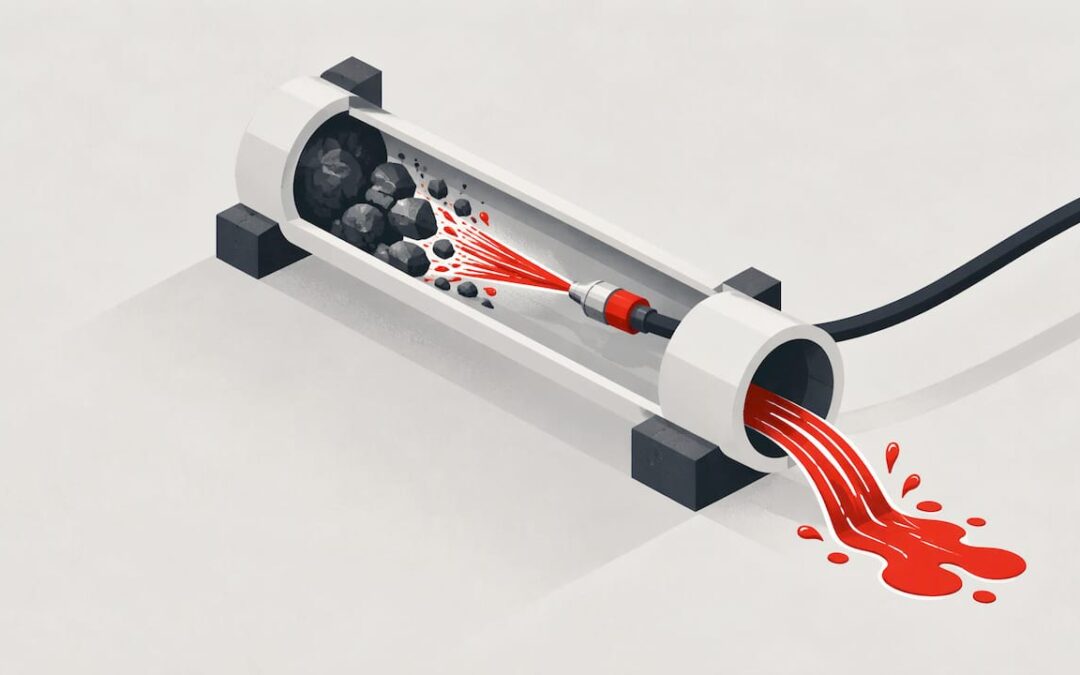
Hydro jetting is a professional drain cleaning method that sends high-pressure water through a drain or sewer line to scour out grease, scale, silt and roots. It is the right call when a clog keeps coming back, when a snake only punches a hole through the blockage, or when a main sewer line backs up. Liberty Drain Co is a family-owned drain cleaning company in Port Charlotte, FL. We offer hydro jetting with sewer camera inspections, upfront pricing and 24/7 emergency availability.
Key Takeaways
- Hydro jetting uses pressurized water to clean the full inside wall of a pipe. It removes buildup instead of just opening a channel through it.
- A residential sewer line jetting job typically costs $300 to $1,100 nationally, with an average near $700, according to Forbes Home.
- Safe jetting depends on the pipe’s condition and on the technician controlling pressure, nozzle and movement. A camera inspection shows what is inside the line first.
- Recurring clogs, slow drains in several fixtures and sewer backups are the usual signs that a line needs more than a quick clearing.
- Liberty Drain Co serves Port Charlotte, North Port, Venice, South Venice and Sarasota County, with 24/7 emergency response.
Table of Contents
- What a Hydro Jetting Service Does
- Signs You Need Professional Hydro Jetting
- How a Hydro Jetting Job Works, Step by Step
- Hydro Jetting vs. Snaking and Other Drain Cleaning
- Is Hydro Jetting Safe for Your Pipes?
- What Hydro Jetting Costs
- How to Keep Drains Clear After Jetting
- Why Recurring Clogs Call for a Different Approach
- Who Needs Hydro Jetting
- Book Hydro Jetting in Port Charlotte
- FAQ
- Sources
What a Hydro Jetting Service Does
A hydro jetting service uses a truck- or trailer-mounted pump, a long high-pressure hose and a specialized nozzle. The hose feeds into the line through a cleanout. Water exits the nozzle in several directions. Some jets push the nozzle forward. Others angle backward to pull the hose along and wash debris toward the exit point.
The result is different from what a drain snake does. A cable auger pushes through the center of a clog and often leaves a coating of grease and sludge on the pipe wall. That coating is what grabs the next round of debris. Jetting cleans the whole circumference of the pipe, which is why it is the usual answer to a drain that clogs again a few weeks after it was “fixed.”
Hydro jetting handles:
- Grease and soap buildup in kitchen lines and restaurant drains
- Mineral scale that narrows older pipes
- Silt, sand and sediment that settle in low-flow sections
- Tree and shrub roots that enter through joints
- Paper and wipe clogs packed in a main line
It is used on kitchen, bathroom, floor and laundry drains, branch lines and the main sewer line from the house to the street or septic connection.
Signs You Need Professional Hydro Jetting
Not every clog needs jetting. A single slow sink often responds to standard drain cleaning. These patterns point to something larger in the line:
- The same drain clogs again and again. If you have cleared it more than once in a few months, buildup on the pipe wall is the likely cause.
- More than one fixture is slow. A tub gurgling when the washer drains, or a toilet bubbling when you run a sink, suggests the main line is restricted.
- Sewage backs up into the lowest drain. A shower or floor drain filling with wastewater is an emergency. Stop using water and call.
- Foul odors from drains that cleaning the fixture does not fix.
- Roots are a known issue. Mature trees near a sewer lateral are a frequent source of repeat blockages, and Southwest Florida yards have plenty of them.
- A commercial kitchen or multi-unit building. Heavy grease loads and many users make buildup a matter of when, not if.
Property managers and landlords see this most with tenant turnover and shared stacks, where one blockage affects several units. Businesses cannot afford the downtime of a backed-up floor drain during service hours.
How a Hydro Jetting Job Works, Step by Step
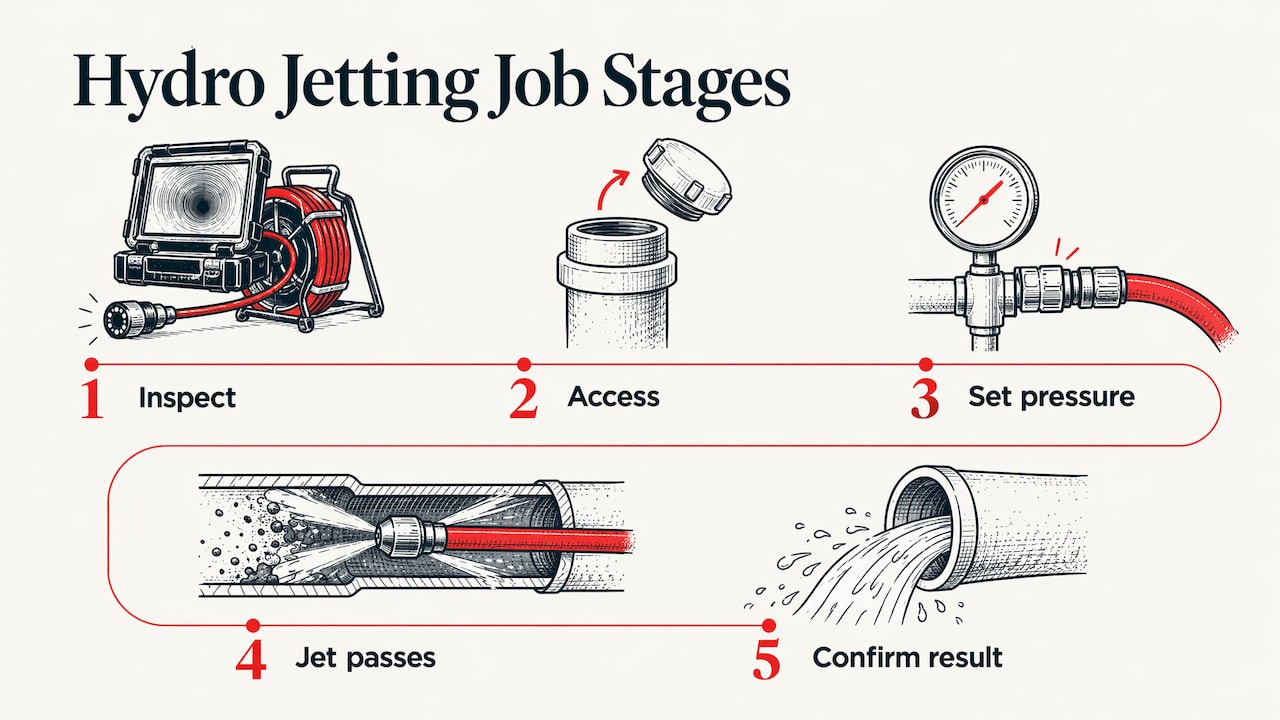
A good job is more than pointing a hose down a pipe. Each stage matters, and each is where jobs go wrong when the wrong person does them.
1. Find the problem first
Before any high-pressure water goes in, the technician needs to know what the line is made of, how deep the blockage sits and whether the pipe is sound. A sewer camera inspection answers those questions on a monitor. It shows grease, roots, a sag in the line or a crack. Liberty Drain Co uses sewer camera inspections to accurately identify issues, so the cleaning matches the actual problem.
2. Choose the access point
Jetting goes in through a cleanout, ideally one outside the house. If there is no accessible cleanout, the technician may need to go in through a toilet flange or roof vent. Rushed access is a common source of mess and damage.
3. Select the nozzle and set the pressure
Nozzle type depends on what you are removing: a penetrating nozzle for a hard blockage, a rotating or spinning nozzle for wall scouring, a root-cutting nozzle for roots. Pressure should match the pipe and the buildup. Home sewer jetters are commonly described as running at up to about 4,000 psi, while lighter kitchen-line equipment runs lower, according to Bill Howe Plumbing.
The pressure number alone does not tell you whether a job is safe. The Water Jet Technology Association’s technical paper on cleaning clay, PVC and HDPE pipe explains that safe operating pressure depends on nozzle movement, jet angle and exposure time. Holding a jet in one spot too long can exploit weak areas and cause fatigue, which calls for lower pressure. The same paper reports that with a rotating nozzle, a reduced jet angle and continuous tool movement, nozzle pressures approaching 7,000 to 10,000 psi may be used on those pipe materials without damage under the conditions it describes.
In plain terms: technique and control matter as much as the machine.
4. Jet the line in passes
The nozzle moves forward through the blockage and then is drawn back at a steady rate, washing debris toward the cleanout or the main. Heavy buildup usually takes several passes. Roots may need a cutting pass before a scouring pass.
5. Confirm the result
After jetting, the line should be flowing freely. Running a camera through the cleaned line shows whether the pipe wall is clean and whether any damage was hidden under the buildup. That second look is how you know the problem is solved rather than temporarily relieved.
Hydro Jetting vs. Snaking and Other Drain Cleaning
| Method | How it works | Best for | Limitation |
|---|---|---|---|
| Drain snake (auger) | Cable with a cutting head breaks through a clog | A single fixture with a simple, soft blockage | Often leaves residue on the pipe wall |
| Hydro jetting | High-pressure water scours the full pipe interior | Grease, scale, silt, roots and recurring clogs in drain and main lines | Needs a pipe that is structurally sound, which a camera confirms |
| Camera inspection | Video shows the inside of the line | Finding the cause, checking pipe condition, verifying results | Locates the problem; cleaning is a separate step |
The three work together. Liberty Drain Co provides drain cleaning, hydro jetting and sewer camera inspection, so the method can be matched to the line instead of defaulting to one tool for every job.
Is Hydro Jetting Safe for Your Pipes?
Hydro jetting is a standard professional method. What decides whether it is safe is the condition of the pipe and the care taken during the job. The Water Jet Technology Association paper cited above ties safe pressure to how the nozzle is moved and how long the jet stays in one place. A pipe that is already cracked, collapsed or badly separated at the joints needs a plan before any pressure goes in.
This is the reason inspection comes first. A camera shows whether the line is a good candidate. If it finds a break or a belly where water pools, you learn that before cleaning, and you can decide on repair with the facts in front of you. Pipe age alone says little. Material and current condition say a great deal.
For homeowners in Port Charlotte, that is relevant. Many homes in the area were built in the decades when different pipe materials were used, and the lines under yards have been shifting with Florida soil and roots for years.
What Hydro Jetting Costs
Prices vary with line length, access, severity and whether the job is residential or commercial. For a national benchmark, Forbes Home reports that residential sewer line hydro jetting runs $300 to $1,100, with an average of $700. Commercial jobs cost two to three times more, in the range of $600 to $3,300.
What moves the price:
- Length and diameter of the line. A longer main takes more time and water.
- Severity of the buildup. Heavy roots or thick scale mean extra passes.
- Access. A clear exterior cleanout is faster than working through a fixture.
- Inspection. Adding a camera inspection adds a line item, but it removes guesswork.
- Timing. After-hours emergency calls are priced differently from scheduled work.
Liberty Drain Co does not publish fixed prices for hydro jetting on its site, because the job depends on the line. What we do commit to is transparent, upfront pricing: you know the cost before work begins.
How to Keep Drains Clear After Jetting
Jetting resets the pipe. What you do afterward decides how long it stays that way.
- Keep grease out. Pour cooking grease into a container and put it in the trash, not the sink.
- Flush only toilet paper. Wipes marketed as flushable collect in mains.
- Watch the trees. If roots caused the blockage, expect them to return and plan follow-up accordingly.
- Use drain screens in showers and kitchen sinks.
- Set a service interval that fits the property. One guide on preventative programs notes that intervals should reflect equipment, usage and condition, not one schedule for every property, as in this maintenance overview. A restaurant and a single-family house need different rhythms.
Addressing the root cause is part of how we work. Clearing the clog is the first half of the job. The second half is finding out why it formed.
Why Recurring Clogs Call for a Different Approach
A clog that returns is information. It tells you the blockage is not at the drain opening. It may be a rough pipe wall that catches debris, a low spot where solids settle, a joint where roots enter, or a restricted section that a snake keeps opening only partly. Repeating the same quick fix produces the same result.
The way out is to see the line and clean it completely. That is what pairing a camera inspection with hydro jetting does. The camera shows the cause. The jetting removes the buildup. Customers have reported resolutions of chronic problems that earlier service calls did not fix, and that is the kind of job this approach is built for.
Who Needs Hydro Jetting
Homeowners
If you have a slow main line, repeated backups or roots, jetting is a long-term solution rather than a patch. Ask for the camera check first so you know the condition of the pipe.
Landlords and property managers
Recurring blockages in rentals cost you in emergency calls and tenant complaints. A full cleaning and a recorded camera view of the line gives you a baseline for the building.
Restaurants and commercial properties
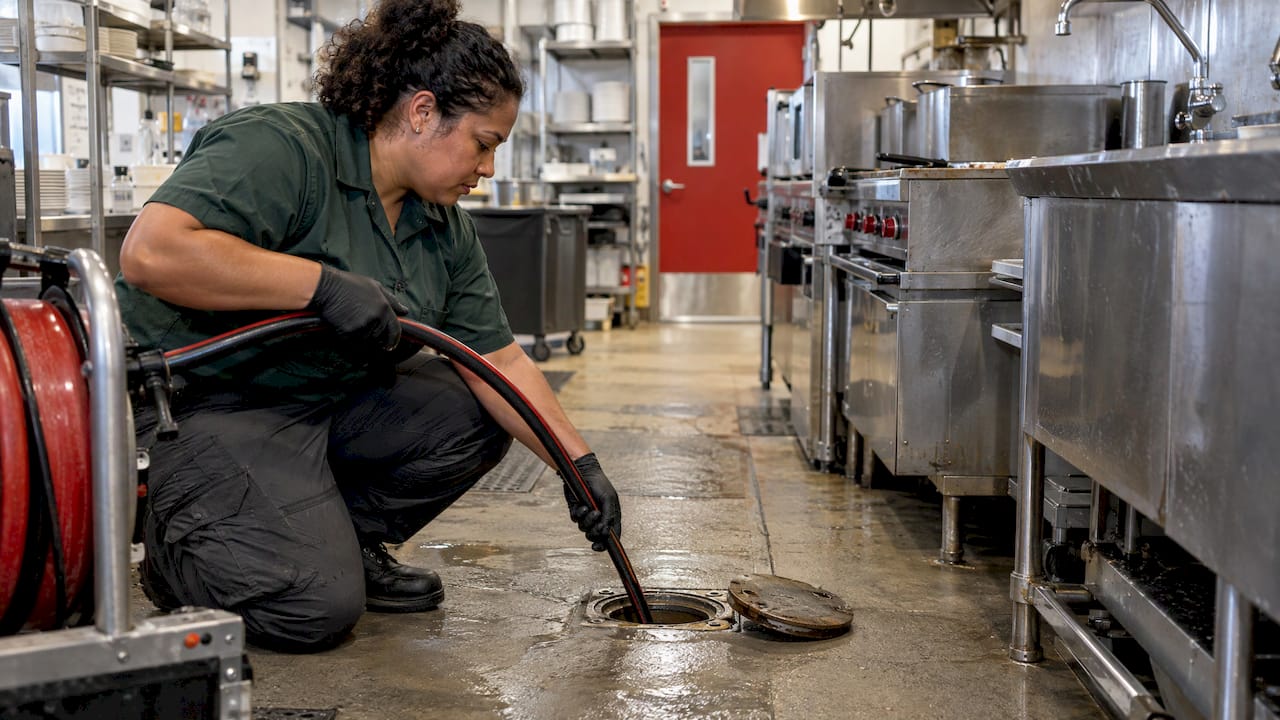
Grease traps and kitchen lines fill quickly. Hydro jetting on a schedule keeps lines flowing and cuts the risk of a backup in the middle of service. Commercial jetting costs more than residential, as the Forbes range above shows, because the lines are larger and dirtier.
After a sewer backup
A backup is urgent. Stop running water, keep people away from affected areas and call for emergency drain service. After the line is cleared, a camera inspection tells you why it happened.
Our View on Hydro Jetting
We run a family-owned drain company in Port Charlotte, and the lesson we hold to is simple: do not clean a line you have not looked at. Hydro jetting is powerful, and it works best when it is paired with a sewer camera inspection. The camera tells us what is in the pipe and what shape the pipe is in. Then the cleaning does exactly what it should.
Our approach is to treat the cause, not just the symptom. If a drain has clogged three times in a year, another quick clearing is not the answer. We want to know why, and we want you to see it. That is also why we stand behind upfront pricing. You should know what the job costs before we start, and you should be able to reach us at 2 a.m. when a sewer backs up, because that is when it happens.
If a chronic problem has defeated other attempts, a complete jetting with an inspection is where we would start.
Scott
Book Hydro Jetting in Port Charlotte
Liberty Drain Co provides hydro jetting, drain cleaning and sewer camera inspection for homes and businesses in Port Charlotte, North Port, Venice, South Venice and across Sarasota County. We offer upfront pricing and 24/7 emergency response. See the full list on our services page or go straight to hydro jetting in Port Charlotte to request service.
You can also look through our work to see the kinds of jobs we handle.
FAQ
How much does it cost to jet a drain?
Nationally, residential sewer line jetting runs $300 to $1,100, averaging about $700, and commercial jobs cost two to three times more, according to Forbes Home. Your price depends on line length, access and how heavy the buildup is. Liberty Drain Co quotes upfront before work starts.
What is jetting a sewer line?
It means cleaning the main sewer pipe with high-pressure water from a specialized hose and nozzle. The water scours grease, scale, silt and roots off the pipe wall and flushes them out. It is used for main line backups and for lines that clog repeatedly.
Can hydro jetting damage pipes?
When the pipe is sound and the technician controls pressure, nozzle movement and time in one spot, jetting is a standard method. The Water Jet Technology Association paper ties safe pressure to those factors. A camera inspection before cleaning shows the condition of the line so the job is planned around it.
Do plumbers fix drain pipes?
Plumbers handle pipe repair and replacement. A drain cleaning specialist focuses on clearing and diagnosing the line. At Liberty Drain Co, that means cleaning, hydro jetting and camera inspection, so you learn what is wrong with the line and get it cleared.
How often should a line be jetted?
There is no single schedule. Service intervals should reflect usage, condition and the property type, as the maintenance guide notes. A restaurant kitchen needs regular visits. A house with one root problem may need follow-up only when the camera shows regrowth.
Sources
- How Much Does Hydro Jet Drain Cleaning Cost? Forbes Home
- Waterjet Cleaning Of Vitrified Clay, PVC And HDPE, Water Jet Technology Association
- Preventative Maintenance Programs, All In Sanitation
- What is Hydro Jetting and How Does It Work?