
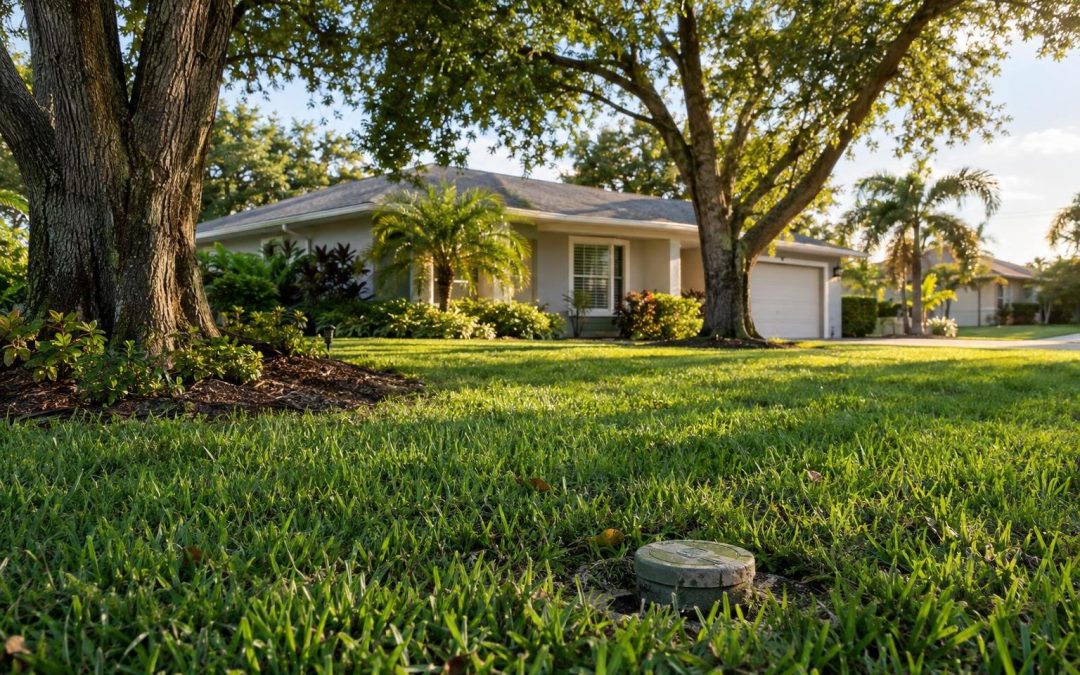
When a drain slows down once, the cause may be an ordinary buildup near the fixture. When several drains act up, or the same clog keeps returning after it has been cleared, the problem may be farther along the sewer line. Tree roots are one possible cause. Knowing what to watch for can help Port Charlotte property owners respond before a recurring blockage becomes a sewer backup.
Roots in a sewer pipe are not always visible from the yard. They commonly enter through an existing crack, loose joint, or other opening, then catch debris as wastewater flows past. That narrowing can lead to repeat clogs. Symptoms offer clues, but they do not confirm the cause; a camera inspection can help show what is happening inside the line.
Signs that roots may be affecting a sewer line
Root intrusion can resemble other drain problems, so look for a pattern rather than relying on one symptom. These signs are worth discussing with a drain professional:
- Several fixtures drain slowly. If sinks, tubs, showers, or toilets are affected around the same time, the restriction may be in a shared line rather than at one fixture.
- Clogs keep coming back. A drain that improves after clearing but slows again may have a continuing obstruction or an underlying pipe issue.
- Fixtures gurgle or bubble. Sounds from a toilet or nearby drain when water runs elsewhere can happen when flow is restricted and air moves through the plumbing.
- Water backs up at a low drain. A tub, shower, or floor drain may be affected when wastewater cannot move freely through a main line.
- There is a persistent sewer odor or an unusual wet patch outdoors. These observations can have multiple causes, but they are reasons to have the area assessed.
One slow kitchen sink does not automatically mean there are tree roots in the sewer line. Grease, food residue, hair, or another localized clog may be responsible. But when several fixtures are affected, or the issue returns after drain snaking, it is sensible to investigate beyond the fixture trap.
What a sewer camera inspection can tell you
Guessing at the cause can lead to repeated clearing without addressing what is happening inside the pipe. A sewer camera inspection lets a technician view the accessible line from within. The video can help identify root intrusion, buildup, cracks, shifted joints, or other visible concerns and show where a restriction is located.
Inspection is useful because symptoms overlap. A recurring clog might involve roots, but it could also relate to grease, debris, a low section of pipe, or damage. Viewing the line helps guide the next step and gives the property owner a clearer picture of the problem. It does not, by itself, repair a damaged section.
If wastewater is actively backing up, limit water use in the affected building and contact a drain professional promptly. Avoid repeatedly flushing toilets or running appliances to test the line, since added water may worsen an active backup. If there is a strong sewer odor or visible wastewater, keep people and pets away from the affected area until it has been assessed.
Choosing the right way to clear root intrusion
The appropriate cleaning method depends on what the inspection reveals and the condition of the pipe. Mechanical cutting can clear roots from inside a line, while sewer root removal addresses the obstruction using a method suited to the line. In some cases, hydro jetting may help remove root material and accumulated buildup from a pipe that is suitable for that service.
High-pressure cleaning is not the right choice for every line. If a pipe is cracked, deteriorated, or otherwise compromised, a technician should consider its condition before selecting a method. Cleaning can restore a path for flow, but it does not close an opening where roots entered or rebuild damaged pipe. If inspection shows a structural concern, ask what options are appropriate for that specific section.
Root removal can reduce an immediate blockage, but roots may return if the opening remains. Ask the technician to explain what the camera view shows, whether the line appears structurally sound, and whether follow-up inspection or repair should be considered. Understanding both the blockage and its possible entry point helps you make a more informed decision than treating the same symptom repeatedly.
What to do while waiting for service
For a suspected main line clog, pause water use where practical and note which fixtures are affected. Keep track of when the symptoms started, whether they recur after cleaning, and whether running one fixture causes another to gurgle or back up. These details can help a technician narrow down the issue.
Avoid pouring chemical drain cleaners into a line when you suspect a sewer blockage. They may not resolve a root obstruction, and chemicals left in standing water can create handling concerns during service. Do not open or enter a sewer access point yourself. If you are unsure whether a problem is isolated to one fixture or affects the main line, describe the symptoms when you call.
Drain cleaning in Port Charlotte and nearby communities
Recurring clogs and sewer backups need a response matched to the location of the problem. Liberty Drain Co provides drain cleaning in Port Charlotte, including inspection and cleaning options for residential and commercial properties. The company also serves Punta Gorda, North Port, and Englewood, Florida. Same-day and 24/7 emergency drain cleaning may be available; call to discuss the issue and current scheduling.
Whether you have a persistent kitchen sink clog or several slow drains that may point to a main line clog, clear information is a useful first step. Share which fixtures are affected, how often the problem returns, and whether you have noticed gurgling, odors, or a backup. A professional assessment can help determine whether the cause is roots or another obstruction and which service makes sense.
For recurring clogs, slow drains, or a sewer backup, contact Liberty Drain Co to discuss service in Port Charlotte, Punta Gorda, North Port, or Englewood. Call Liberty Drain Co at (941) 740-7256 to ask about scheduling.
Frequently Asked Questions
What are common signs of tree roots in a sewer line?
Several slow drains, recurring clogs, gurgling, or backups can be clues, but they do not prove roots are present. A sewer camera inspection can help identify the cause and show the condition of the line.
How can a sewer camera inspection help?
A camera inspection can show roots and other visible obstructions or pipe concerns inside an accessible line. It helps locate the issue, but does not repair a damaged pipe.
Can hydro jetting clear roots from a sewer line?
Mechanical root cutting or hydro jetting may help clear root material, depending on the pipe's condition and the blockage. Cleaning does not seal an opening where roots entered, so ask whether inspection suggests a separate repair may be needed.
What should I do if I suspect a main line clog?
Avoid adding chemical drain cleaners or repeatedly running water to test an active backup. Limit water use and contact a drain professional to discuss the symptoms.
Which nearby areas does Liberty Drain Co serve?
Liberty Drain Co serves Port Charlotte, Punta Gorda, North Port, and Englewood. Call (941) 740-7256 to discuss the problem and ask about current scheduling.
Sources
- Tree Roots in Sewer Line: 6 Signs in Older East Bay Homes | Apex Plumbing
- Tree Roots in Sewer Line: Signs, Causes & Solutions
- Tree Roots in Sewer Line: Signs & Fixes | Evolution Plumbing
- Tree Roots in Sewer Line? Signs and Fixes
- Early Signs of Hidden Tree Root Damage in Your Sewer Line
- Tree Roots in Sewer Line | Viking Sewer Rehab
- Liberty Drain Co, Port Charlotte, FL 33953, US – MapQuest